10 Digital Products You Can Create This Weekend
1. A Checklist
This is the fastest thing you can make and people love them. A checklist takes a big overwhelming process and breaks it down into steps someone can actually follow. Think about a process you know well and turn it into a simple checklist. Done in a few hours. Easy to design in Canva. Easy to sell for $7 to $27.
2. A Worksheet or Workbook
A worksheet helps someone think through a problem or make a decision. It gives them space to write, reflect, and get clarity. Great for topics like goal setting, pricing your services, figuring out your niche, or planning a launch. If your audience needs to work something out in their head, give them a structured way to do it on paper.
3. A Template
Templates are one of the highest-value digital products you can create because they save people time. Canva templates, email templates, caption templates, Pinterest pin templates, resume templates. If you can create a done-for-you version of something people have to do regularly, they will pay for it. Templates are also easy to create if you already use Canva.
4. A Short PDF Guide or Mini Ebook
This does not have to be long. Seriously. A 10 to 20 page PDF that walks someone through one topic clearly is more valuable than a 100-page guide that says the same thing five different ways. Pick one problem. Solve it thoroughly. Format it in Canva. Done.
5. A Swipe File
A swipe file is a collection of copy people can customize and use. Email subject lines. Instagram captions. Pinterest descriptions. Blog post intros. Sales page phrases. If writing is the thing your audience struggles with, give them the words. They copy it, tweak it for their brand, and save hours of staring at a blank screen.
6. A Resource or Toolkit Bundle
This is a curated list of tools, links, apps, or resources organized around one topic. Think "My Favorite Free Tools for Beginner Bloggers" or "The Exact Resources I Use to Run My Business as an Introvert." People pay for curation because nobody has time to research everything. If you've already done the work of finding what's good, package it.
7. A Printable Planner or Tracker
Daily planners, weekly schedules, habit trackers, content calendars, budget trackers. People who are trying to build something new need structure. A simple, clean printable they can download and print is something they'll actually use every day. Keep it focused on one area of their life or business so it feels specific and intentional.
8. A Mini Email Course
A mini email course is 3 to 5 emails that teach one skill or walk someone through one process, delivered automatically through an email platform like Aweber. You write the emails once, set them up to go out automatically, and that's it. This is a great digital product for people who want to teach something but aren't ready to build a full course yet.
9. A Quick Start Guide
A quick start guide is exactly what it sounds like. A beginner-focused resource that walks someone through getting started with something specific, step by step, with no confusion. Think about a topic where beginners always feel overwhelmed and lost in the first week. That's your guide. Make it simple, clear, and actionable.
10. A Digital Journal or Prompt Pack
Journaling prompt packs, reflection questions, affirmation sets, or guided journal pages for a specific audience or transformation. These work well for mental wellness niches, business niches, personal development, and more. If your audience needs help getting their thoughts out of their head and onto paper, this is for them.
How to Pick the Right One to Start With
Don't try to make all ten. Pick one.
The best way to choose is to match the product to the problem your audience already has. What do they ask you about most? What do they struggle with in the early stages of whatever you teach? Start there.
Also start with what you can actually finish this weekend. A checklist you complete and publish is worth more than a 10-part course you never launch. Small and done beats big and sitting in a folder forever.
And before you spend a full weekend building something, test the idea first. Ask your email list. Post a poll. See if people actually want it. It takes five minutes to validate an idea and it saves you hours of building something nobody buys.
Where to Sell Your Digital Product Once It's Done
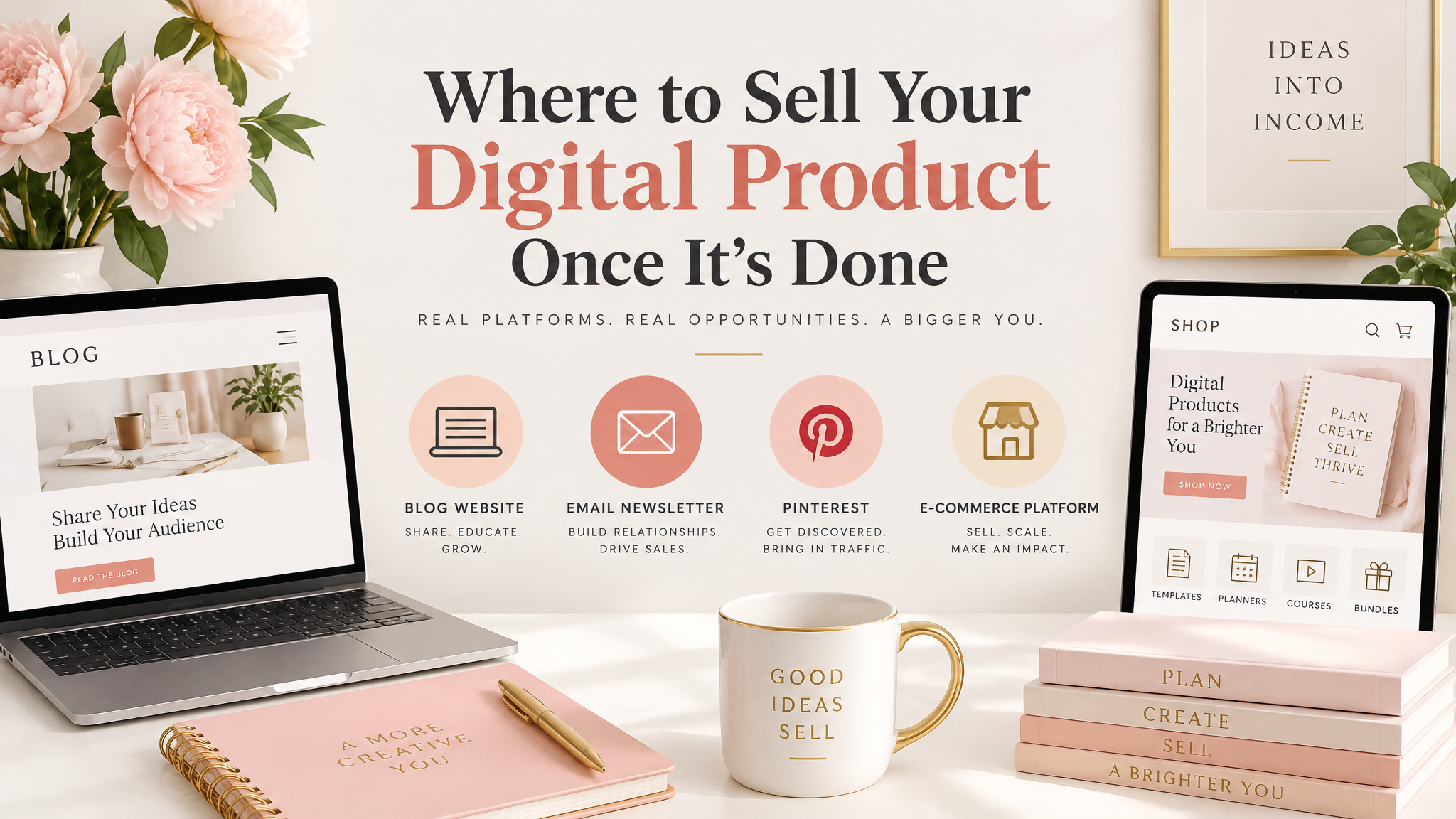
You don't need a complicated setup to start selling.
Your blog is the long game. A well-optimized blog post about the problem your product solves can bring in traffic from Google and Pinterest for months or years. That traffic lands on your page, sees your product, and buys.
Your email list is the fastest path to your first sale. The people on your list already trust you. A simple email introducing your new product and explaining who it's for and what it does is often all it takes.
Pinterest is free traffic that keeps working. Create a pin that speaks to the problem your product solves, link it to your sales page or blog post, and let it sit. Pins have a long shelf life and can keep sending people to your product long after you create them.
For hosting and selling, platforms like Gumroad, Payhip, and ThriveCart are all beginner-friendly options that don't require a lot of tech setup to get started.
Ready to Take Your Digital Product From Idea to Actually Selling?
Creating the product is step one. But knowing how to price it, set up your funnel, market it, and automate it so it sells while you sleep, that's where most beginners get stuck.
That's exactly what the Digital Product Masterclass walks you through.
It covers everything from finding a profitable niche and building your product, to setting up your sales funnel, marketing without burnout, and automating the whole thing so you're not glued to your laptop 24/7. Ten chapters. All of it laid out step by step so you're not guessing what to do next.
If you're serious about turning your knowledge into income and building something that works for you long term, this is where you start.
Get the Digital Product Masterclass here
You already have something worth selling. Now let's build the system around it.