How to manage clients without losing your mind

Image on Freepik.com
I know the feeling. You just landed a new client. You should be celebrating, but instead, you have this tiny knot in your stomach.
You’re thinking about the emails. You’re thinking about the random Zoom calls they’re going to want. You’re already tired and the project hasn't even started yet.
Most business advice says you need to be available 24/7. They tell you that being fast is the only way to show you care. If you’re an introvert, that’s a recipe for burning out in six months. It's not sustainable. It makes you hate your business.
I had to learn the hard way that you can't run a business on someone else's terms. You have to set boundaries that protect your energy. If you don't, you won't have any energy left to actually do the work.
Here is how I handle my clients without feeling like I’m always "on."
Stop the notification hunt
The biggest mistake I see is letting clients message you everywhere. It starts small. One person is in your Instagram DMs. Another is emailing you. Someone else found your phone number.
Before you know it, you're checking five different apps every hour just to make sure you didn't miss something. It makes you feel like you’re constantly being chased. It’s hard to relax when your phone is buzzing in your pocket with "quick questions" from three different directions.
You have to pick one place for work talk. Just one. For me, it’s email or Voxer.
When you start with a new client, tell them straight up. "I only check messages in [this one place]. If you send it anywhere else, I’m going to miss it."
It might feel a little blunt at first. You might worry they'll think you're being difficult. But it actually makes them feel better. They know exactly where to find you. They don't have to wonder if they should text you or email you. And you get to close all those other tabs and breathe. You get your personal life back.
Meetings are energy vampires

Image on Freepik.com
I used to say yes to every "quick sync" a client asked for. I’d spend the whole morning worrying about the call. Then I'd spend 30 minutes on the call. Then I'd spend two hours recovering from the call because my social battery was at zero.
That’s a huge waste of time.
Now, I use the camera on my laptop and upload it to Google Drive so I can share it. If a client has a question, I record a three minute video showing them what I’m working on. I talk through the updates. They can watch it whenever they want. I don’t have to fix my hair. I don't have to get "up" for a meeting. I can just be myself and get the info across.
If they still want a call, I have a specific link with my available times. I only do calls on certain days. Usually just one or two days a week. If they aren't free then, we wait until next week.
Your schedule is yours. Don't let someone else fill it up just because they don't want to type an email.
The first 48 hours are everything
Clients are usually the most anxious right after they pay you. They’ve just handed over their money and they want to know you’re on it. If you don’t have a plan, they start reaching out with random ideas or questions because they're nervous.
I use an automated onboarding process to stop this before it starts. As soon as they sign, they get a welcome packet.
It tells them exactly what they need to know:
How to send me files so I don't have to ask.
When I check my email (usually twice a day, not every five minutes).
That I don’t work weekends or late nights.
What the very next step is so they don't have to guess.
Because I give them all the info up front, they don't feel the need to bug me. It sets the tone that I’m the professional. I have a system. They can relax because I’m in control.
Don't be afraid of the word "No"
A lot of us are people pleasers. We say yes to extra tasks because we don't want to make things awkward. A client asks for "one more small thing" and you say sure, even though you know it's going to take you two hours.
But every time you say yes to something outside the project, you’re stealing time from yourself. You're also teaching the client that your time is free.
When a client asks for something extra, I just say: "I’d love to help with that, but it’s outside what we planned for this month. We can add it to next month’s list or I can send over a separate quote for it."
Most of the time, they realize they’re overstepping and they back off. Or they pay you more. Either way, you win. You aren't working for free and you aren't feeling resentful.
Pick your "Deep Work" hours
You need time where the world cannot find you. This is the most important part of being an introverted entrepreneur. We need quiet to think.
I have blocks in my calendar where my phone is in another room. My email is closed. No Slack. No nothing. This is when I actually do the work.
If I spent all day responding to people, the work wouldn't get done. Then I’d be stressed about deadlines. Then I'd be working at 10 PM to catch up. That's how people burn out.
Protect those hours like your life depends on it. Your best ideas come when you aren't being interrupted every ten minutes.
The Introvert’s Toolbox

Image on Freepik.com
I use a few specific tools to help keep people out of my personal space. You don't need all of these. Just pick the one or two that solve your biggest headache.
First, get a scheduling link. I use the HBA Calendar because it’s included and simple. This stops that annoying "when are you free" dance. I set it up so it only shows a few spots a week. It also automatically adds a buffer between calls so I have time to sit in silence and recover before the next person talks to me.
Loom is probably my favorite. If I need to explain something, I just record my screen and talk over it. It takes two minutes. I send the link and I'm done. No meeting required. My clients love it because they can watch it whenever they want.
I also suggest using a project tool like Trello or Notion. This is the one place where the work lives. When a client asks "where are we at with this," I just tell them to check the board. It stops those constant "just checking in" emails that ruin my flow.
If your inbox is a mess and it's stressing you out, look at Help Scout. It makes emails feel more like a list of tasks and less like a personal conversation. It helps create that mental gap you need so you don't feel like you're constantly "on call."
Lastly, use your Auto-responder, I use the one included in HBA. You don't have to wait until you’re on vacation to use it. I have mine on sometimes just to tell people I’m in "focus mode" and will get back to them in a few hours. It handles the expectation for me. That way I don't feel guilty for not replying the second a message hits my phone.
Dealing with the guilt
I know it feels weird at first. You might feel guilty for not being "available." You might think you're being "mean" by not answering a text on a Saturday.
But remember why you started this. You didn't start a business to have 10 bosses instead of one.
Setting these rules doesn't make you unprofessional. It makes you an expert. High-level experts aren't reachable 24/7. They're busy doing the work.
People respect people who have boundaries.
When you show up for a client and you're well-rested and focused, you give them much better results. If you show up tired and annoyed because they've been messaging you all night, the work suffers. Boundaries are actually a way of taking better care of your clients.
It’s your business
At the end of the day, you're the one in charge. If you feel like a slave to your inbox, you need to change the system.
Try picking one thing this week. Maybe it's turning off your Slack notifications for two hours. Maybe it's finally setting up a scheduling link so people stop emailing you for meetings.
Just try it. You’ll be surprised how much better you feel when you aren't waiting for the next "ping" on your phone. You'll have more energy for your family, your hobbies, and the actual work that makes you money.
Get the Checklist
If you aren't sure where to start, I put together a quick checklist for you. It’s a simple list of the boundaries you need to set to get your time back.
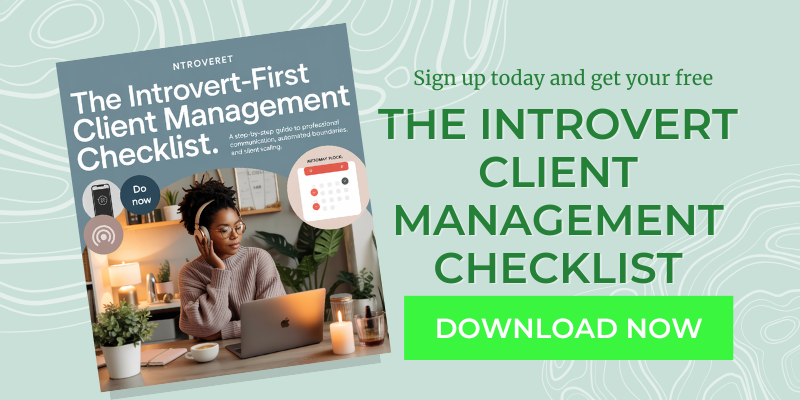
Just pick one thing from the list this week. Even a small change can make a huge difference in how you feel about your business.