The Faceless Funnel Blueprint: How To Build A 6-Figure Sales System Without Showing Your Face
For years, the "gold standard" of online business has been the personal brand. We’ve been told that to be successful, we must be the face of our company. We’re told to post daily selfies, record "day in the life" stories, and build a deep, personal connection with an audience by being visible 24/7.
But for many entrepreneurs, especially introverts or those who value their privacy this feels less like a dream and more like a tax on their mental energy.
The good news is that the tides are shifting. We are entering an era where people buy solutions, not just personalities. Faceless brands are not just surviving; they are thriving, often growing faster and scaling more easily than personal brands because they aren't bottlenecked by a single person's time or image.
This guide is your complete blueprint for building a 6-figure sales system that operates entirely behind the scenes. Whether your goal is $5,000 a month or $50,000, the "Faceless Funnel" approach allows you to build a profitable, sustainable, and private business.
Why Faceless Funnels Work (And Why Now)
The internet is currently experiencing "influencer fatigue." While personal brands can be powerful, they often come with a perceived lack of objectivity. Users are increasingly looking for specialized expertise and direct results rather than just another personality to follow.
The Shift: Solutions Over Personalities
When you have a specific problem like a plumbing leak or a technical bug in your software you don't care what the person fixing it looks like. You care that they have the right tools and a proven track record of solving that exact problem. This is the core advantage of a faceless business: it forces you to focus 100% of your marketing on the value you provide.
Privacy as a Competitive Advantage
In an age where data privacy and personal security are major concerns, staying anonymous isn't just a preference; it’s a strategic choice. A faceless brand is an asset you can eventually sell. It’s much harder to sell a business built entirely around "You." By building a brand that stands on its own, you are creating a more liquid and scalable asset.
The Trust Paradox
There is a common misconception that people won't trust you if they can't see you. In reality, anonymity can actually increase trust if handled correctly. When you remove the "person," you remove the potential for personal bias or distraction. The trust is placed in the system, the data, and the results.
Case Study Examples:
The 7-Figure Course Creator: Many of the most successful technical courses on platforms like Udemy or Teachable feature only screen recordings and voiceovers. The creator is never seen, yet they move millions of dollars in volume because the curriculum is the star.
The Digital Product Empire: Brands that sell templates, spreadsheets, or design assets often operate entirely as "studios" or "agencies" without a visible founder.
The Consulting Firm: Many B2B consulting firms operate under a brand name, using case studies and white papers to build authority rather than a charismatic CEO.
The Faceless Funnel Framework - 5 Core Components
Building a faceless business requires a different structural approach than a personal brand. You cannot rely on "likability" to close sales; you must rely on utility.
Component #1: The Magnetic Brand Identity
Since you aren't the face, your brand identity must be the "character."
Naming Strategy: Choose a name that describes the outcome or the niche (e.g., "The Passive Architect" vs. "John Smith").
Visual Identity: Invest in a professional logo and a consistent color palette. Your "aesthetic" replaces your face. Use high-quality iconography and typography to convey professionalism.
Brand Voice: Define how your brand talks. Is it clinical and data-driven? Is it encouraging and supportive? Consistency in voice creates the "personality" your audience will connect with.
Component #2: Authority-Building Content
You build authority by being useful. Without personal stories, your content should focus on:
Data-Driven Content: Use research, statistics, and industry benchmarks.
Educational Frameworks: Create proprietary "methods" (e.g., "The 3-Step Content Flywheel") that become synonymous with your brand.
Voiceovers and Screen Shares: Use tools like Descript or Loom to create high-value tutorials. The viewer focuses on the information being shared on the screen, not the speaker.
Component #3: The Trust Architecture
Trust in a faceless model is built through Social Proof and Transparency of Process.
The Proof Library: Systematically collect client wins, screenshots of results, and text-based testimonials.
Third-Party Validation: Highlight any mentions in the press or partnerships with known brands.
Behind-the-Scenes: You can show the "how" without showing the "who." Show your workflow, your software setup, or your research process.
Component #4: The Conversion System
Your sales pages and emails must do the heavy lifting.
Problem-Focused Headlines: Instead of "How I made $10k," use "How to Generate $10k in Recurring Revenue Using This System."
Faceless VSLs (Video Sales Letters): Use high-quality slides with a professional voiceover or kinetic typography.
Strategic CTAs: Keep calls to action direct and professional. Focus on the "Access" or the "Solution" rather than "Booking a call with me."
Component #5: The Delivery Experience
Once someone buys, the experience should be seamless and high-touch without being high-face.
Automated Onboarding: Use clear, text-based instructions and welcome videos that use screen-captures.
Community Support: Use platforms like Slack or Discord where the brand (or a team member) provides support via text.
Funnel Architecture for Faceless Businesses
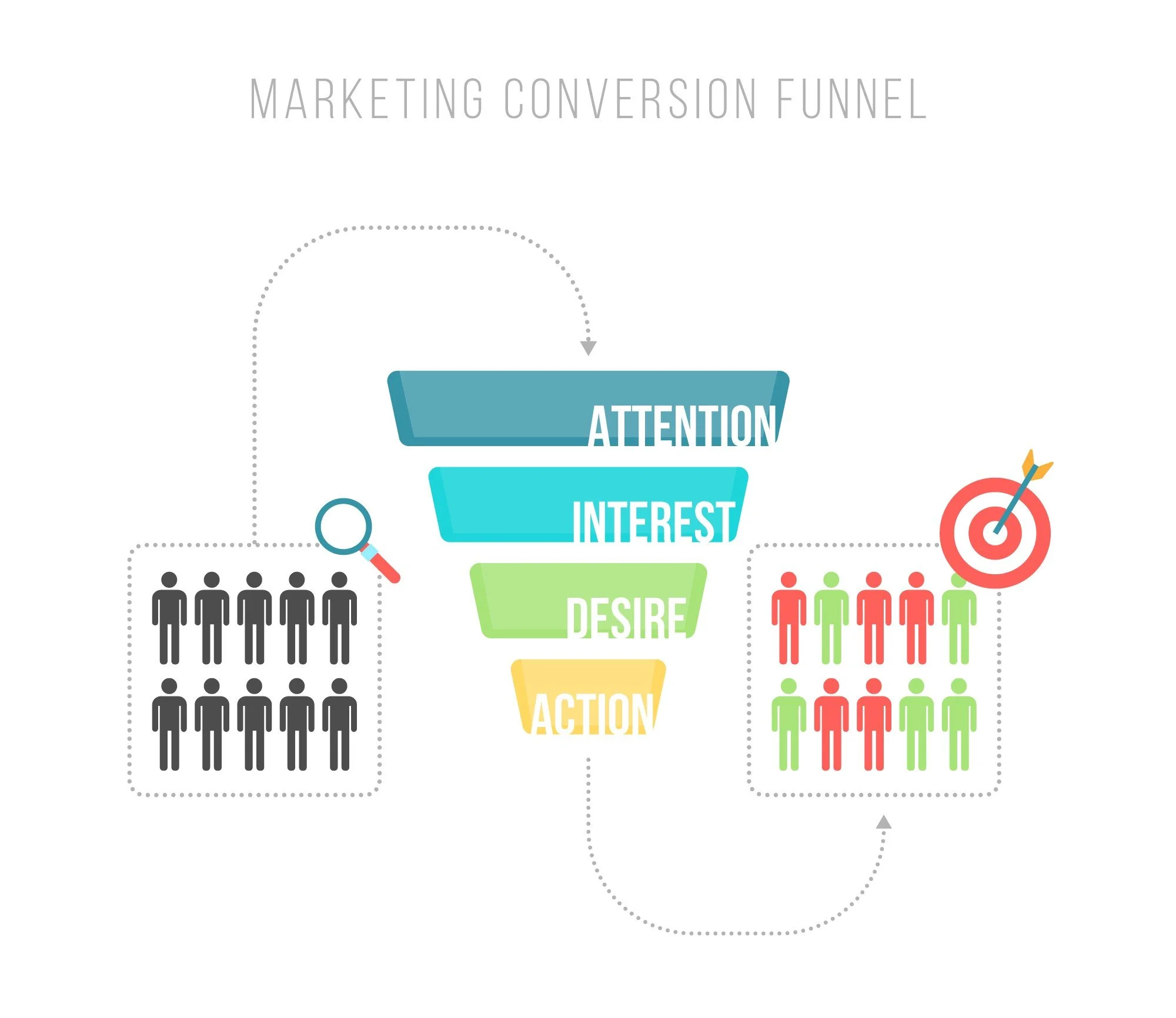
Image on Freepik.com
A funnel is simply the path a stranger takes to become a customer. For faceless brands, this path is paved with high-value milestones.
1. The Awareness Stage (Top of Funnel)
Your goal is to get found.
SEO & Blogging: Write long-form, evergreen content that answers specific search queries.
Pinterest: A highly visual search engine where your face is entirely irrelevant. Focus on "Problem/Solution" graphics.
YouTube: Focus on "How-to" tutorials. Use B-roll and screen recordings.
2. The Consideration Stage (Middle of Funnel)
Once they find you, you must capture their information.
The Lead Magnet: Offer a high-utility "quick win."
Examples: Checklists, Swipe Files, Budget Calculators, or SOP Templates.
The Nurture Sequence: A series of 5-7 emails that provide additional value and introduce your methodology.
3. The Conversion Stage (Bottom of Funnel)
This is where the sale happens.
The SLO (Self-Liquidating Offer): A low-priced product ($7–$47) that helps offset your ad costs.
Automated Webinars: A pre-recorded presentation that walks through a solution and offers your main product at the end.
4. The Retention Stage (Post-Purchase)
The best customer is one who buys again.
Upsells: Offer a more comprehensive version of the solution they just bought.
Referral Programs: Incentivize your customers to share your brand with others.
Platform-Specific Faceless Strategies
Every platform has a "faceless" workaround. Here is how to navigate the most popular ones:
Instagram: Use aesthetic b-roll (nature, workspace, abstract textures) with text overlays. Carousels are the strongest tool for faceless accounts because they allow for deep educational value.
YouTube: Focus on "Video Essays" or "Tutorials." Use stock footage (from sites like Pexels or Storyblocks) or professional animations to keep the viewer engaged.
LinkedIn: This is a text-heavy platform. You can build massive authority by sharing industry insights, "hot takes" on news, and detailed case studies without a single selfie.
Email: This is your most powerful asset. Email allows for "intimate" storytelling about results and frameworks without the need for visual presence.
Monetization Models for Faceless Businesses
Not all business models are suited for faceless growth. These five are the most effective:
Digital Products: Courses, ebooks, and templates. These are "create once, sell forever" assets.
Productized Services: Instead of "General Consulting," offer a "LinkedIn Ghostwriting Package" or a "Sales Funnel Audit." The deliverable is clear and doesn't require a face-to-face meeting.
Licensing: Build a system or a curriculum and license it to other businesses to use.
Affiliate Marketing: Build a niche content site and recommend tools and products you use.
SaaS/Digital Tools: Building a software or a simple calculator tool is the ultimate faceless business.
Tools and Tech Stack for Faceless Funnels
You don't need a massive budget to start. Here is a "Pro" tech stack that keeps you anonymous for roughly $200/month:
Website/Funnel Builder: Systeme.io or HBA. These platforms handle your landing pages, courses, and payments in one place.
Email Marketing: ConvertKit or Aweber. Essential for building your automated nurture sequences.
Design: Canva Pro. Use this for all your social graphics, lead magnets, and presentation slides.
Video Creation: Descript. This is a game-changer for faceless creators. It allows you to edit video by editing text and can even create an AI version of your voice if you don't want to record audio manually.
Payments: Stripe or ThriveCart. Professional checkout experiences that build trust instantly.
Overcoming Faceless Funnel Challenges
It is important to address the "elephant in the room": the challenges of anonymity.
Challenge: "People buy from people."
The Reality: People buy from people they trust. You build trust by being consistently right and consistently helpful. If your free advice solves a small problem for them, they will trust your paid product to solve a larger one.
Challenge: Standing out.
The Reality: In a sea of "me-too" personal brands, a polished, professional faceless brand can actually stand out more. Focus on a unique Point of View (POV). Don't just share information; share a specific way of doing things.
Challenge: Community building.
The Reality: You don't have to be the "Guru." You can be the "Facilitator." Build a community where the members help each other, and the brand provides the framework and the platform.
The Faceless Funnel Implementation Roadmap
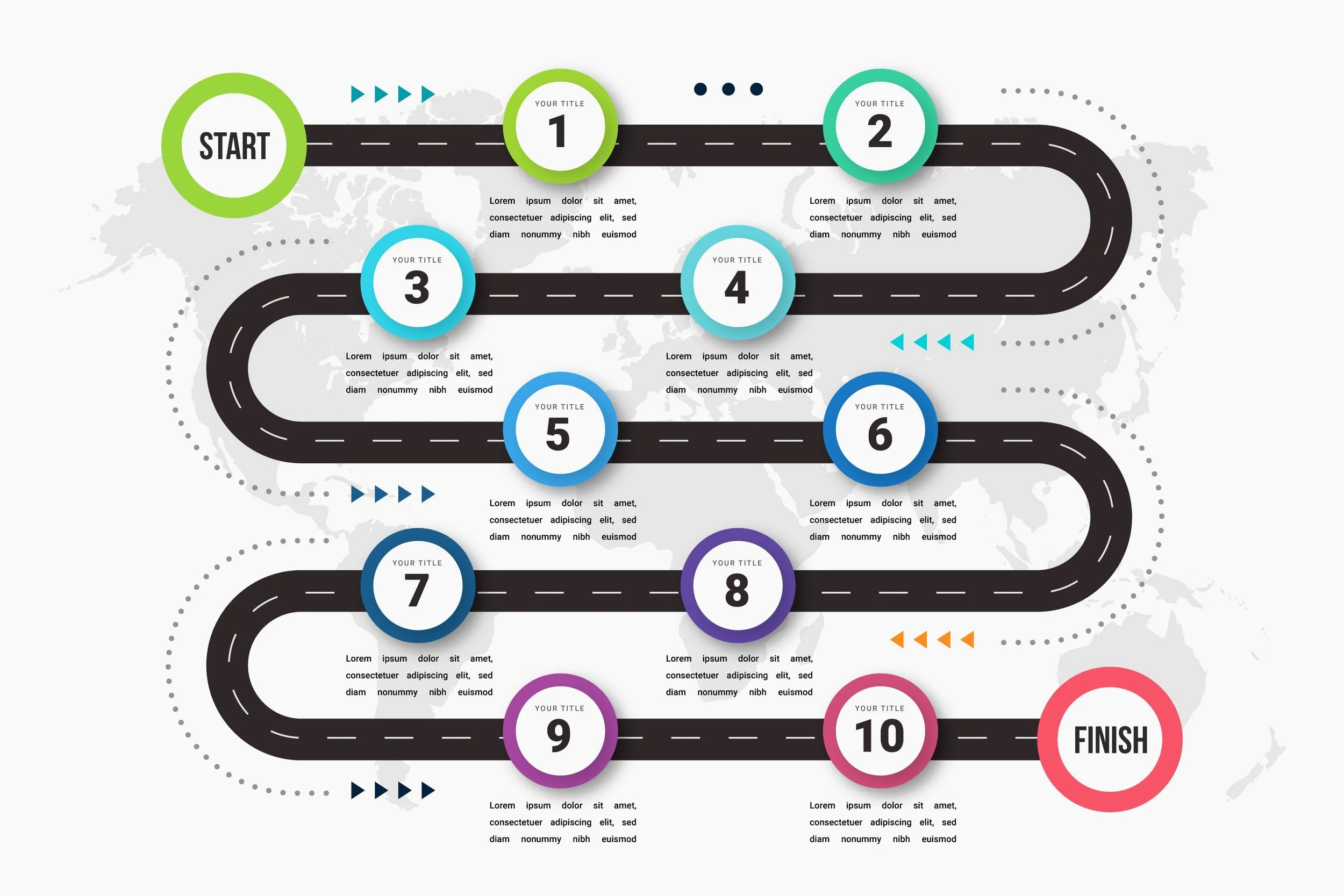
Image on Freepik.com
Phase 1: Foundation (Months 1-2)
Define your niche and a $100k+ problem.
Create your Brand Identity (Name, Colors, Logo).
Outline your "Core Methodology."
Phase 2: The Lead Engine (Months 3-4)
Build your Lead Magnet.
Set up your landing page and email welcome sequence.
Start posting on one "Search" platform (Blog, YT, or Pinterest).
Phase 3: The Conversion Engine (Months 5-6)
Build your main offer (Course or Service).
Create a high-converting Sales Page with plenty of social proof.
Run a "Beta" launch to gather initial testimonials.
Phase 4: Optimization & Scale (Months 7-12)
Analyze your conversion rates.
Introduce paid ads (Meta or Google) once the funnel is profitable.
Automate everything using Zapier or Make.
Success Metrics for Faceless Funnels
To know if your system is working, track these "Health Indicators":
Opt-in Rate: 30–50% of people who visit your landing page should sign up for your lead magnet.
Email Open Rate: Aim for 30%+ to ensure your brand voice is resonating.
Sales Conversion: 1–3% of your total email list should convert to a paid offer each month.
Refund Rate: Keep this below 5% by providing an excellent, text/video-based onboarding experience.
Conclusion
Building a faceless funnel isn't just about hiding; it’s about freedom. It’s about building a business that doesn't require you to be "on" all the time. It allows you to focus on the work, the results, and the strategy, rather than the lighting for your next Reel.
Privacy and profit are not mutually exclusive. By following this blueprint, you can build an asset that serves your customers, generates significant revenue, and leaves you with the most valuable asset of all: your time and your privacy.
Your Next Step: Choose one niche and one brand name today. Don't overthink the logo or the tech. Start by defining the one problem you can solve better than anyone else, and begin building your Authority-Building Content.