You Got a Subscriber, Now What? Here's Exactly What to Do Next

You did the work. You set up the opt-in. You created the freebie. Someone actually signed up.
And then you froze.
Because now what?
This is the part nobody really talks about. Everyone tells you to build your email list but very few people walk you through what happens after someone joins it. So most beginners do one of two things. They send that first welcome email and then disappear for weeks. Or they never send anything at all because they don't know what to say.
Both of those things cost you the relationship before it even starts.
Your email list is only as valuable as what you do with it. So let's talk about exactly what to do after someone joins.
Table of Contents
Most Beginners Get People on Their List and Then Do Nothing
The First Thing You Should Send
What a Simple Welcome Sequence Looks Like
What to Share After the Welcome Sequence
How to Build Trust Before You Ever Pitch Anything
When and How to Introduce Your Paid Offers
Email Marketing Tools Beginners Can Start With
Most Beginners Get People on Their List and Then Do Nothing
Growing your list is not the finish line. It's the starting line.
When someone gives you their email address they're telling you something. They're saying "I'm interested. I want to hear more." That's a huge moment of trust from a stranger on the internet. And if you go silent after that, you break the trust before you've even had a chance to build it.
Here's what happens when you go quiet. They forget who you are. They stop opening your emails. They mark you as spam. And the list you worked so hard to build becomes a collection of people who have no idea why they signed up in the first place.
Your new subscriber needs to hear from you within the first 24 hours. That window is everything.
The First Thing You Should Send
Your welcome email is the most opened email you will ever send. The open rate on a welcome email is significantly higher than any other email in your sequence. That means this is your best shot at making a real first impression.
Don't waste it with a generic "thanks for signing up" email.
Your welcome email should do a few things. Deliver the freebie they signed up for. Remind them who you are and why you do what you do. Tell them what they can expect from being on your list. And feel like it was written by a real human being who is actually glad they showed up.
Keep it warm. Keep it short. Keep it real.
You don't need to write a novel. Just talk to them like you would talk to someone you genuinely wanted to help.
What a Simple Welcome Sequence Looks Like
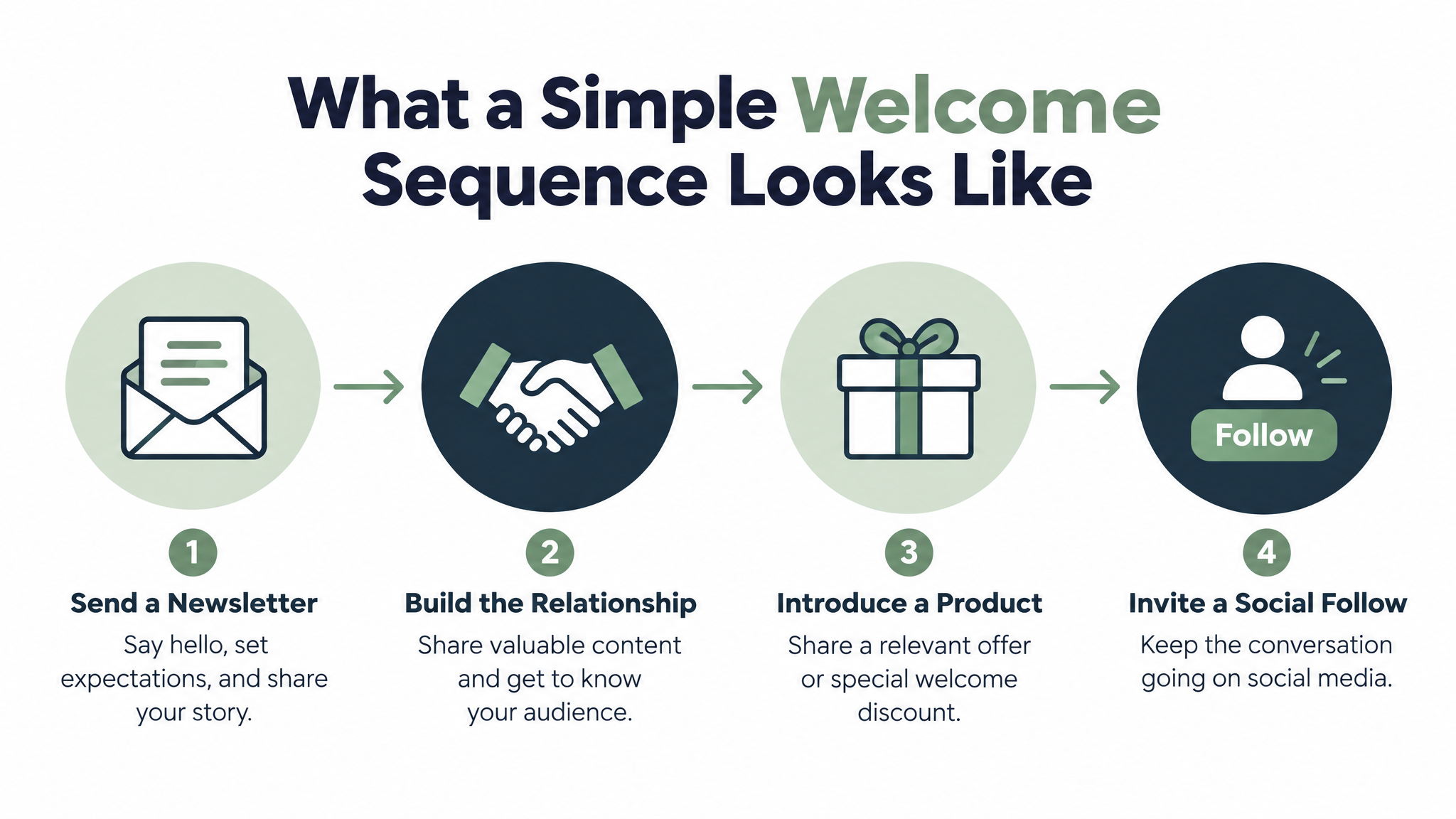
You do not need 10 emails to make a good first impression. A simple 3 to 5 email welcome sequence is enough to introduce yourself, build some trust, and let them know you have something valuable to offer.
Here's a simple way to think about it.
Email 1 delivers the freebie, welcomes them, and tells them who you are in a human, relatable way.
Email 2 shares your story. Not the highlight reel version. The real version. The one where they think "oh wow that sounds like me."
Email 3 teaches them something. Give them a quick win. Show them you actually know what you're talking about and that you're here to help them, not just sell to them.
Email 4 introduces what you offer. Not a hard pitch. Just a natural mention of how you can help them go deeper.
Email 5 checks in. Ask them a question. Invite them to reply. Let them know you're a real person and you actually want to hear from them.
Write every single one of these like you're sending a message to a friend. Not a newsletter. Not a broadcast. A conversation with one person.
What to Share After the Welcome Sequence
Once your welcome sequence is done, the relationship doesn't stop. That's where a lot of people fall off.
You don't have to email every day. For most introverted entrepreneurs, once a week or twice a month is a sustainable rhythm that keeps you consistent without draining you.
There are three types of emails every beginner should be rotating through.
Value emails teach, share a tip, answer a question, or give them something useful. These build trust and keep people opening your emails.
Story emails share something from your own experience that connects to what your audience is going through. These build the relationship and make people feel like they actually know you.
Offer emails invite them to take the next step, whether that's a paid product, an affiliate recommendation, or a free resource. These make you money.
You don't have to overthink what to write about. If you're talking to the right audience, you already know their questions. Answer them in your emails.
How to Build Trust Before You Ever Pitch Anything
Trust is not built by being funny or relatable or having a great brand. Trust is built through consistency.
When you show up in someone's inbox regularly and you actually give them something worth reading, they start to expect you. They start to look forward to your emails. That's when the relationship becomes real.
Share your story in a way that makes them feel less alone. Your audience doesn't need you to be perfect. They need you to be honest. When you share the real experience, the struggle, the thing you figured out after doing it the hard way, they see themselves in you.
Give value first and the sales become natural. When someone has been reading your emails for weeks and trusting what you say, a recommendation from you doesn't feel like a pitch. It feels like advice from someone they trust.
When and How to Introduce Your Paid Offers
You don't have to wait forever before mentioning what you sell. But you should give your welcome sequence time to do its job first.
After your welcome sequence, if someone is still on your list and opening your emails, they're warm. They're interested. It's okay to make an offer.
The key is in how you do it. Don't come in with "BUY THIS NOW." Come in with "here's a problem a lot of you have told me you're dealing with, and here's the thing I made to help with that."
The difference between pitching and recommending is intention. Pitching is trying to get the sale. Recommending is trying to solve the problem. One feels gross. The other feels helpful. Your reader can tell the difference every time.
Email Marketing Tools Beginners Can Start With
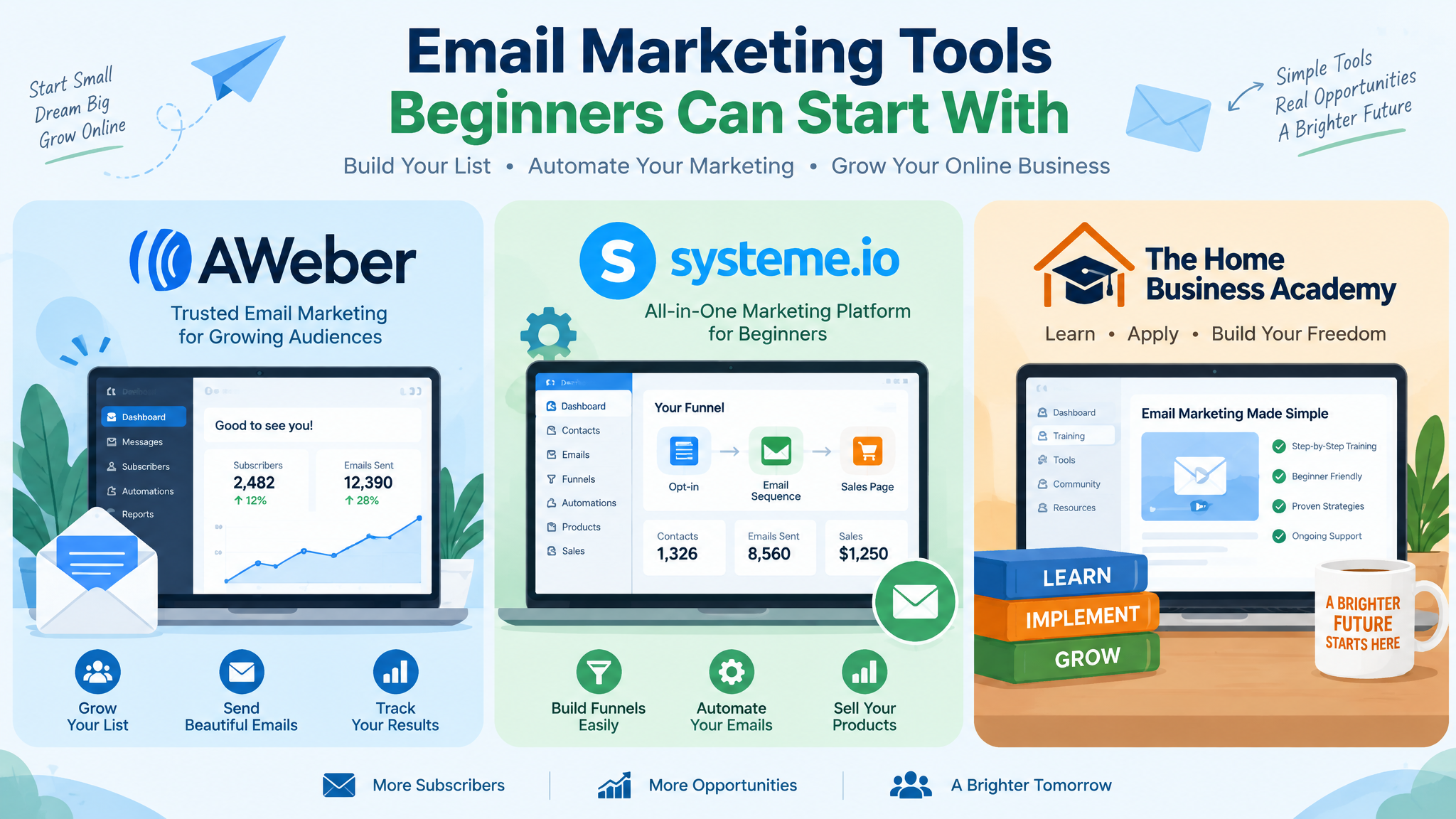
AWeber is one of the most beginner friendly email platforms out there. It has automation built in so you can set up your welcome sequence once and it goes out automatically every time someone new joins your list. You don't have to manually send anything.
Systeme.io has a free plan that includes email marketing, sales pages, and funnels all in one place. If you want to keep everything connected without paying for multiple tools, this is a great starting point.
HBA Funnel Builder is another solid option especially if you want your email marketing, funnels, and landing pages all working together in one place. It's built for people who want a complete system without stitching five different tools together.
When you're looking for an email platform as a beginner, keep it simple. You need automation, a clean editor, and something you can actually figure out without a tech degree. Don't let the tool be the reason you don't get started.
Your Email List Deserves More Than Silence
If you've been sitting on a list of subscribers and not emailing them because you don't know what to say, I want you to know that's more common than you think. And it's fixable.
The Inbox Income guide was made for exactly where you are right now. It's an email marketing guide built specifically for introverted entrepreneurs who want to build a real relationship with their list, write emails that actually get opened, and sell with integrity without feeling pushy or fake.
It covers how to write your welcome sequence, how to stay consistent without burning out, how to structure emails that build trust and make sales, and how to do all of it in a way that actually sounds like you.
If you're ready to stop leaving your list on read and start turning it into income, this is your next step.
Your list is waiting. Let's give them a reason to stay.
Frequently Asked Questions
What should I send to new email subscribers?
Start with a welcome email that delivers whatever they signed up for, introduces who you are, and tells them what to expect from being on your list. Send it within the first 24 hours while they still remember signing up.
What is an email welcome sequence?
A welcome sequence is a short series of emails, usually 3 to 5, that goes out automatically after someone joins your list. It's how you introduce yourself, build trust, and warm up your new subscriber before you ever mention anything paid.
How often should I email my list?
Once a week or twice a month is a sustainable rhythm for most beginners. Consistency matters more than frequency. Showing up regularly with something worth reading beats emailing every day and burning out.
How do I keep my email subscribers from going cold?
Stay consistent. The number one reason subscribers go cold is silence. Even one email a week keeps you in their inbox and keeps the relationship warm.
How do I make money from my email list?
Through a mix of promoting your own digital products, recommending affiliate products you actually trust, and occasionally inviting your list to work with you or buy from you directly. The key is building trust first so that when you do make an offer it feels natural.
Do I need a big list to make money from email marketing?
No. A small engaged list of the right people will always outperform a massive list of people who don't open your emails. Focus on quality over quantity.
What is the best email platform for beginners?
AWeber, Systeme.io, and HBA Funnel Builder are all solid starting points depending on what you need. If you want everything in one place, Systeme.io or HBA are great options. If you just want a simple, reliable email tool, AWeber is hard to beat.