Stop Undercharging: A Practical Pricing Guide for Introverted Founders

You spent weeks or months building your offer. You researched the lessons, designed the PDF, or mapped out the service. Then it came time to actually add a price to the checkout page and everything ground to a halt. You were paralyzed. Too high feels like you're being greedy or "too much." Too low feels desperate, like you're shouting for attention. You probably ended up picking a number somewhere in the middle that made you cringe anyway.
If that sounds like you, I want you to know this isn't a math problem. It’s not about finding the perfect formula or calculating your overhead costs. It’s a psychology problem.
As an introvert, you’re likely wired for high empathy. You're a people-pleaser by nature. This makes pricing feel like a confrontation. You're worried about what people will think or if they'll be "shocked" by the number. But here’s the reality: undercharging isn't humility. It’s a business model that burns you out and keeps you from doing your best work.
In this post, we’re going to look at why introverts struggle with pricing and a simple framework to set your rates with confidence. I’ll show you how to raise your prices without writing a three-page apology and the mindset shift that makes the whole process feel natural instead of "salesy."
Why Introverts Specifically Struggle With Pricing
There’s a specific kind of internal friction that happens when an introverted entrepreneur tries to name their price. It’s something most business coaches don't talk about because they assume everyone is comfortable "owning their worth" out loud. For us, it’s more complicated than that.
The People-Pleasing Trap Introverts are usually very attuned to how other people feel. We can sense discomfort a mile away. When we think about a potential client looking at our price, we often anticipate their "sticker shock" before it even happens. We imagine them being disappointed or thinking we're "too expensive." To avoid that feeling of rejection or tension, we lower the price preemptively. We try to make it "easy" for them, but we end up making it hard for ourselves to actually run a business.
The Story About Greed A lot of us grew up with the idea that being "quiet" and "humble" were the ultimate virtues. Charging a premium price can feel like you're bragging or putting yourself on a pedestal. Bragging feels unsafe for an introvert. It draws too much attention. So we keep our prices low as a way to stay "small" and "safe." The problem is that chronically underpriced offers attract clients who don't actually value your expertise.
The Comparison Spiral Because we like to do our research, we spend way too much time looking at what everyone else is doing. We find the person in our niche with the lowest price and we anchor our value to that person. We think, "If they only charge $50, how could I charge $200?" This is a race to the bottom. You're comparing your unique approach and the deep results you get for people against someone else’s random business model.
Charging what you’re worth isn’t arrogance. Undercharging is actually a disservice. Your clients get less of your best energy when you’re stressed about money, and you end up resenting the work you used to love.
The Real Cost of Undercharging (It's Not Just Money)
Image by BRGFX on Freepik.com
Most people think the only downside to low prices is a smaller bank account. I wish that were true. The actual cost is much higher than that.
When you undercharge, you almost always attract the wrong clients. It’s a weird paradox of business, but price-sensitive clients are often the most demanding. They’re the ones who send fifteen emails a day and expect you to be on call 24/7. They view your service as a commodity rather than an investment. When you’re dealing with that kind of energy, you start to resent your clients and the work itself.
Undercharging also makes it impossible to deliver your best work. Resentment is a massive creativity killer. If you’re being paid $500 for a project that actually takes $2,000 worth of energy, you’re going to find yourself cutting corners just to get it done. When you're paid fairly, you can show up fully. You can give that client your full attention because you’re not worried about where the next ten clients are coming from.
There’s also the issue of volume. If your price is too low, you need a massive amount of clients just to hit your basic income goals. More clients means more emails, more Zoom calls, and more energy output. For an introvert, this is a fast track to burnout. A quiet business model isn't built on volume. It’s built on value.
The 3 Pricing Models Every Introverted Entrepreneur Should Know
Before we get into my specific framework, you need to understand the different ways people price things. Most people pick one of these without even thinking about it.
1. Cost-Based Pricing This is where you figure out how much your time and software costs, then add a little bit on top for profit. This is how most people start out, but it’s a trap for solopreneurs. Your time is finite. You only have so many hours in a week. If you price based on time, you cap your income. You’re also basically punishing yourself for getting better and faster at what you do.
2. Market-Based Pricing This is the comparison trap I mentioned earlier. You look at the "going rate" for a coach or a course and you stay within that range. The problem is that you don't know that person’s business. You don’t know if they’re broke, if they have a massive team, or if their product is actually any good. Pricing your uniqueness against someone else’s generic offer is a losing game.
3. Value-Based Pricing This is where the introvert’s advantage really comes in. This model prices things based on the outcome the client receives, not the hours you put in. Introverts are great at this because we’re deep listeners. We understand the transformation our clients are looking for. Instead of asking "What should I charge for an hour of my time?" you ask "What is this result worth to my client?"
The Quiet Pricing Framework: How to Set Your Price With Confidence
I want to give you a step-by-step way to look at your offers. Use this the next time you’re sitting at your desk trying to figure out what to charge.
Step 1: Anchor to the Outcome, Not the Hours Forget about how long it took you to make the course or how many hours the coaching package includes. Look at the result. If your offer helps someone save ten hours a week, what is that worth to them? If your course helps someone land their first $3,000 client, a $500 price tag is an incredibly small investment for them. When you focus on the outcome, the price starts to feel like a logical decision rather than an emotional one.
Step 2: Find Your Confidence Floor This is a term I use for the absolute lowest price you can charge while still feeling good about the work. Imagine you’re working with a client. If you feel even a tiny bit of resentment or "ugh" when you see their name in your inbox, your price is below your confidence floor. This isn't about what the market says. It's about your energy and sustainability. If a price makes you feel excited to show up, you’ve found the right neighborhood.
Step 3: Apply the 10X Value Test A great rule of thumb is that your client should perceive at least ten times the value of what they pay. This doesn't mean you have to give them $2,000 in cash if they pay $200. It means the value they get, the time saved, the pain avoided, the clarity gained, should feel like it’s worth $2,000 to them. When you know you’re providing that much value, it’s a lot easier to state your price.
Step 4: Say the Price Out Loud Without Apologizing This sounds silly, but you should practice saying your price in the mirror. You need to get the words out of your mouth without adding a "but I can do it for less if that’s too much" at the end. Silence after you state your price isn’t awkward. It’s professional. Give the other person a second to process the number. You don’t need to fill the silence with justifications.
The Quiet Pricing Framework isn't about being the most expensive person in the room. It’s about being in alignment with the value you create and the life you want to live.
Pricing by Offer Type: What to Charge for Each
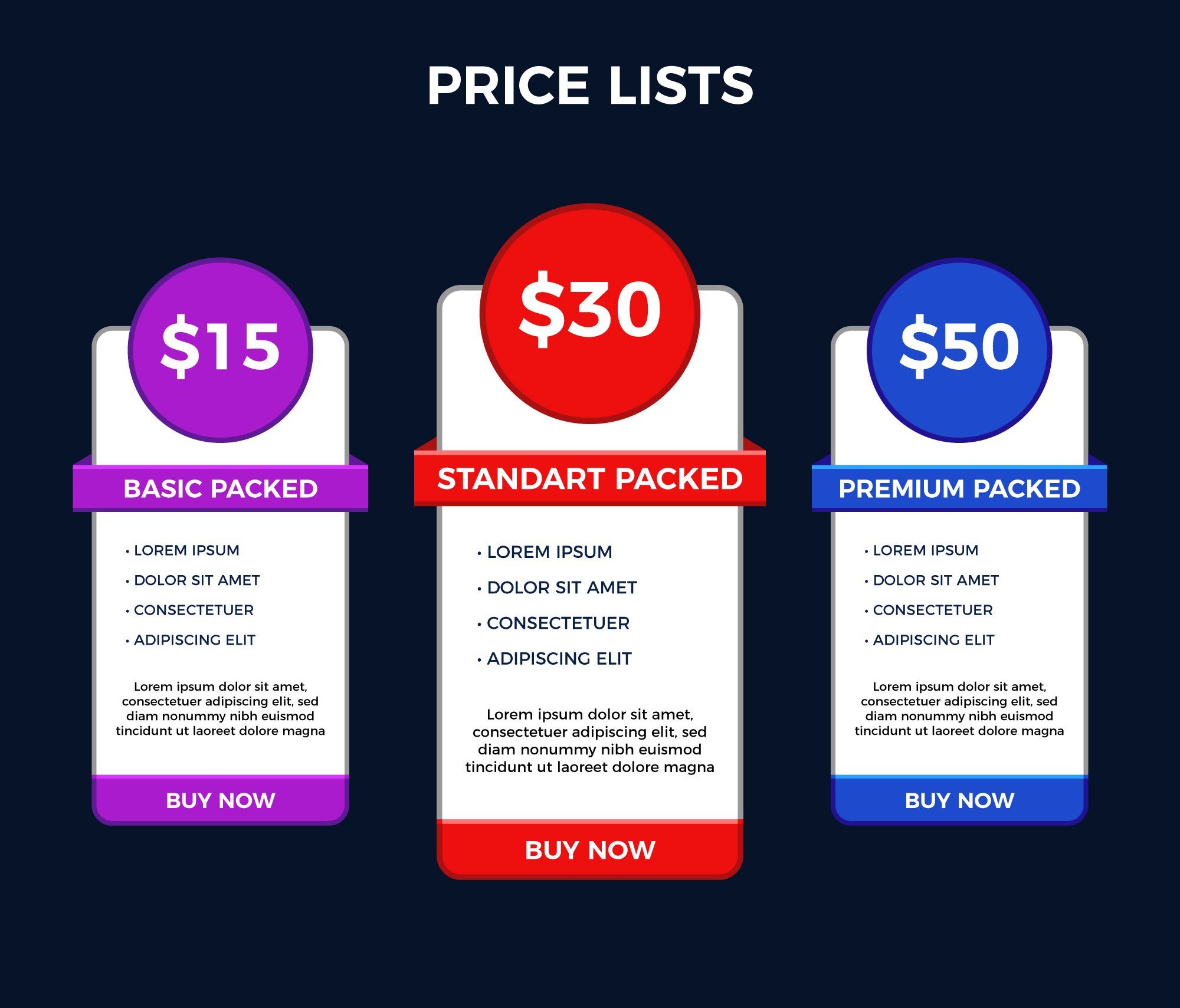
Image on Freepik.com
I know sometimes you just want to see some actual numbers to know if you're in the right ballpark. These aren't hard rules, but they're good benchmarks for a value-based business.
Digital Products If you're selling digital assets, your prices usually fall into these buckets:
PDF Guides or Ebooks: $17 to $67. These are great for entry-level "low-ticket" offers.
Templates or Swipe Files: $27 to $97. People pay more for things that save them time and effort.
Mini-Courses: $47 to $197. These should solve one very specific problem quickly.
Signature Courses: $197 to $997+. These provide a full transformation or a big system.
Toolkits or Bundles: $97 to $297. These give people a "business in a box" feel.
Services When you’re trading your direct energy for money, the prices should reflect that:
1:1 Coaching (per session): $150 to $500. This depends on your experience and the depth of the work.
Done-For-You Services: $500 to $5,000+. This is the highest level of value because you're doing the work for them.
VIP Days: $997 to $3,000. These are great for introverts because you go deep for one day and then you’re done.
Retainers: $500 to $2,500 per month. This provides stability for you and ongoing support for them.
Memberships and Continuity
Low-tier (community only): $17 to $47 a month.
Mid-tier (community + content): $47 to $97 a month.
High-tier (community + coaching): $97 to $297 a month.
These ranges give you a starting point. Remember, if you’re getting results that are way above average, you should be at the higher end of these ranges.
How to Raise Your Prices Without a Long Explanation or Apology
At some point, you’re going to realize your current prices don't work anymore. Maybe you’re fully booked and can’t take on anyone else. Maybe you’ve realized the work takes twice as long as you thought. Most introverts handle this by sending a long, nervous email explaining why they "have" to raise prices because of "inflation" or "rising costs."
Please don't do that. You don't owe anyone a three-paragraph justification for how you run your business. Prices go up. That's just how the world works. The more you explain, the more you invite the other person to negotiate with you.
A better way is the Grandfathering Method. This is very introvert-friendly because it feels generous. You tell your current clients that your rates are going up for new people, but because you value their loyalty, you’re going to keep them at their current rate for the next three or six months. This rewards the people who have been with you while allowing you to charge new people what the service is actually worth.
When you do announce a price increase to your list or a client, keep it brief. You can say something like: "I’m reaching out to let you know that my prices for [Service Name] will be increasing on [Date]. If you’ve been thinking about starting a project, you can lock in the current rate by booking before then. I’m really looking forward to what we’re building."
That’s it. No apologies. No guilt.
The Mindset Shift That Makes Pricing Feel Natural
I want to end with a few reframes that changed the way I look at my own business.
Pricing Is an Act of Service When you charge a fair, premium price, you are actually serving your client better. You aren't distracted by financial stress. You aren't rushing through their work to get to the next client. You’re giving them a high-end experience because you have the resources to do so. Undercharging leads to a mediocre experience for everyone involved.
Your Ideal Client Is Not a Bargain Hunter The right client, the one who is going to do the work and get the big result is usually happy to pay for quality. They see your price as a signal of the experience they’re about to have. People who haggle over $20 are usually the ones who will give you the most headaches. When you raise your prices, you often filter out the "difficult" clients and attract the "dream" clients.
Confidence Is Priced In The energy you bring when you state your price is the energy your client uses to decide. If you sound hesitant or apologetic, they’re going to feel hesitant about buying. If you state your price with calm confidence, they’re going to feel confident that you can actually help them.
You didn't build a business to trade one form of exhaustion for another. You built it to have freedom and to do work that matters. Part of that means pricing in a way that allows you to stay in the game for the long haul.
Wrapping Up
Pricing doesn't have to be a battle with your own personality. To recap the framework:
Focus on the outcome the client gets, not the hours you spend.
Find your "Confidence Floor" where you no longer feel resentment.
Make sure the value is at least 10x the price you’re asking.
State your price clearly and then stop talking.
If you’re still feeling stuck on what your specific number should be, I have something that can help. I put together a Pricing Confidence Worksheet that walks you through these steps in detail. It takes you from "I have no idea what to charge" to "I have a price I can say out loud" in about twenty minutes. You can grab that below.
What’s one offer you’ve been undercharging for? Does it feel like it’s time to move that "Confidence Floor" up a bit?
❓ FAQ
Q: Why do introverts tend to undercharge for their services?
Introverts are highly empathetic and people-pleasing by nature, which leads to preemptively lowering prices to avoid perceived conflict or judgment — even when that reaction never materializes.
Q: How do I price my offers without feeling salesy?
Shift from cost-based to value-based pricing. Focus on the outcome your client receives, not the hours you put in — then set a price you can state confidently without apologizing.
Q: When should I raise my prices?
Raise your prices when you're consistently fully booked, when you've gained new skills or results, or when you feel resentment before delivering your work — all are signs your price no longer reflects your value.
Q: How do I tell clients my prices are going up?
Keep it brief, warm, and unapologetic. Give 2–4 weeks notice, offer a short window to lock in the current rate, and avoid over-explaining. Confidence in the announcement signals confidence in the value.
Q: What is value-based pricing for solopreneurs?
Value-based pricing means charging based on the transformation or result your offer delivers to the client — not the time it takes you to create or deliver it. It's the most sustainable pricing model for solo business owners.