The 7-Email Welcome Sequence That Warms Up Subscribers and Makes Your First Sale on Autopilot
You worked hard to get someone on your email list. They opted in, confirmed their email, downloaded your freebie and then you had absolutely no idea what to send them next.
So you sent nothing.
And they forgot you existed.
This happens all the time. Not because you don't care, but because nobody actually teaches you what to do AFTER someone joins your list. You get all this advice about growing your list and almost none about what to do once people are on it.
That's what we're fixing today.
A welcome sequence is the series of emails that goes out automatically after someone opts in. And when it's done right, it does something really powerful it takes a complete stranger and turns them into someone who trusts you enough to buy from you. Without you having to do anything after you write it.
You write it once. It runs forever. Every single time someone new joins your list, they go through the same journey getting to know you, learning from you, and eventually buying from you, while you're out living your life.
By the end of this post you'll know exactly what to write in each email, how to set it all up, and what numbers to watch so you know it's actually working.
Why Your Welcome Sequence Is Your Most Important Email Series
Most people treat their welcome sequence like a formality. They send one email that says "here's your freebie, talk soon!" and that's it. Then they wonder why nobody's buying.
Here's what you need to know: welcome emails get 4x higher open rates than any other email you'll ever send. Your new subscriber is more likely to open your emails in the first 48 to 72 hours than they ever will be again. That window is gold and most business owners waste it completely.
A good welcome sequence does a few things. It delivers on your promise, meaning they actually get the thing they signed up for. It introduces who you are without making it all about you. It tells them what to expect from being on your list. And it builds enough trust that when you eventually make an offer, they're already warm.
For introverted entrepreneurs specifically, this is one of the best tools in your business. You write it once, on your own time, in your own words. No going live. No performing. No showing up every single day. Your personality comes through exactly the way you want it to and it runs quietly in the background, doing the work for you.
Before You Write a Single Email Get These 3 Things Clear
Skip this part and your sequence won't convert. I promise.
Know your one goal. Your welcome sequence should lead somewhere specific. One offer. One next step. Don't try to pitch everything at once — pick the one thing you want new subscribers to do after they finish the sequence and write toward that.
Know where your reader is starting from. What does someone believe when they first join your list? What do they need to believe before they'll buy? Your job is to close that gap. That's literally what the whole sequence is doing.
Know your tone. Your emails should sound like you. Not a newsletter from a big corporation. Not a textbook. Just you, talking to one real person, like you would in a DM. Introverts are actually really good at this — thoughtful, warm, real. Lean into that.
The 7-Email Welcome Sequence Broken Down Email by Email
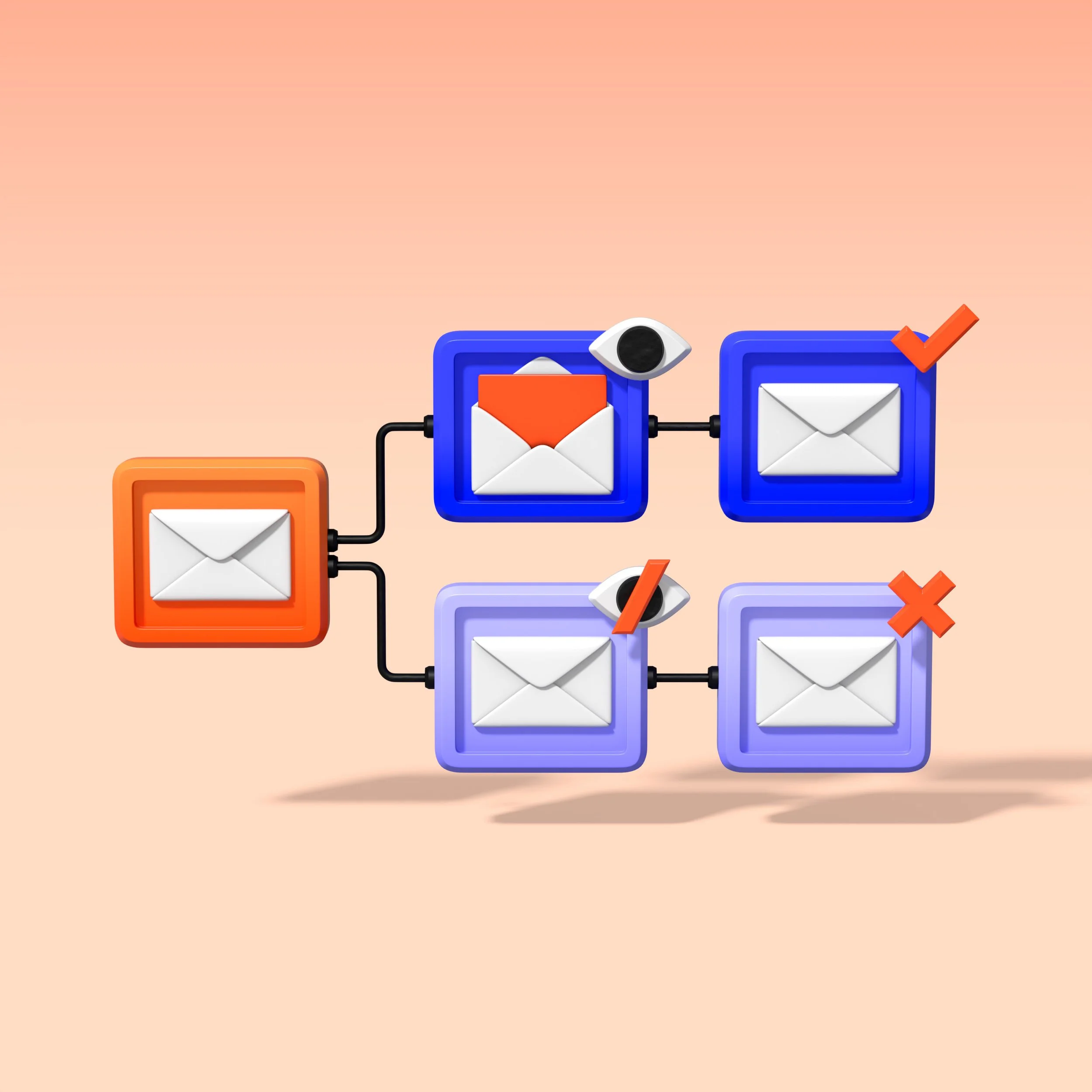
Image on Magnific.com
Here's the framework. Each email has one job. Together they take someone from "who is this?" to "I trust her and I'm ready to buy."
Space them out every two days. The full sequence runs over about 10 to 14 days. You write it once, set it live, and it runs automatically every time someone new joins.
Email 1: The Delivery Email
Send immediately on sign-up
One job: deliver the freebie and set the tone.
This email is short. Like, really short. They signed up for something give it to them right away. Don't make them hunt for the link.
After the link, add two or three sentences about who you are and what this list is about. Then ask them a simple question and tell them to hit reply. Something easy like "what's the biggest thing you're working on in your business right now?"
That reply request matters more than people think. When a new subscriber responds to your email, it tells email providers that they actually want your emails. That protects your deliverability from day one.
Subject line ideas:
"Here's your Pricing Confidence Worksheet"
"Your free worksheet is inside — plus a quick note from me"
Example:
Hey [first name]! Your worksheet is right here → [link]. I'm Alexis, and this is where I share strategies for introverted entrepreneurs who want to build a real business without burning out on social media. Quick question before you dive in what's the #1 thing you're trying to figure out in your business right now? Hit reply and tell me. Alexis
Email 2: The Origin Story Email
Send Day 2
One job: build trust by being real.
This is where you tell your story. Not your whole life story just the part that's relevant to the problem your reader is currently dealing with. The struggle, the turning point, where you are now.
The more honest you are, the better this email works. People don't connect with perfect. They connect with real.
End it with a line that brings it back to them. Something like "if any of that sounds familiar, you're in exactly the right place."
Subject line ideas:
"I used to charge $25 for work worth $250 (here's what changed)"
"The embarrassing truth about how I used to price my work"
Example:
I want to tell you something I don't share everywhere. When I first started my business, I was so scared of charging too much that I was basically giving my work away. I'd spend hours on something and charge $30 for it. And I kept telling myself I'd raise my prices once I felt more "ready." That day never came on its own. It wasn't until [turning point] that I finally understood what my work was actually worth and started charging accordingly. I share this because I know you might be in that same spot right now. And I want you to know it doesn't have to stay that way.
Email 3: The Value Email
Send Day 4
One job: give them something useful with zero ask.
No pitch. No CTA to buy anything. Just one genuinely helpful tip, framework, or insight they can use right now.
This is one of the most important emails in the sequence because it proves you're the real deal before you ever ask for anything. Trust builds fast when people realize you're actually going to help them, not just sell to them.
End with a light teaser about what's coming next to keep them opening.
Subject line ideas:
"The 10-minute exercise that changes how you price everything"
"One question to ask before you set any price"
Example:
Today I just want to give you something useful no strings attached. Before you set the price on any offer, ask yourself this one question: "What is this result actually worth to my client?" Not what it's worth to me. Not how long it took me to create. What is the outcome worth to them? Most introverts price based on their own comfort level, not the client's reality. That one shift changes everything. Try it this week. Tomorrow I'm going to share something that takes this even further keep an eye out.
Email 4: The Common Enemy Email
Send Day 6
One job: name what's actually been holding them back.
This email calls out the external thing that's keeping your reader stuck. For your audience, that's things like: the pressure to market like an extrovert, the belief that they need a huge audience, the cycle of undercharging and overdelivering.
You're not blaming your reader. You're pointing at the system or mindset that's been working against them. That's a very different thing and it creates a lot of relief.
End by hinting that there's a better way, and that you're about to show them.
Subject line ideas:
"The advice that's keeping you broke and burnt out"
"Why everything you've been told about pricing is wrong for introverts"
Example:
Can I be honest with you about something? The reason most introverted entrepreneurs stay stuck isn't lack of talent. It's not lack of effort either. It's that they've been handed a blueprint built for extroverts and told to follow it. Show up every day. Be loud. Go live. Build hype. And when that doesn't work or when it works but leaves you completely drained most people assume something is wrong with them. Nothing is wrong with you. The blueprint just wasn't built for the way you work. There's a quieter, smarter way. I'll show you.
Email 5: The Social Proof Email
Send Day 8
One job: show them it's possible through someone else's results.
Share a real result yours or a client's. Keep it story format. Don't make it a bullet point list of credentials. Just tell the story of someone who was where your reader is now, and where they ended up.
The reader should see themselves in this story. That's when it lands.
At the very end of this email, softly mention your paid offer for the first time. Just a line or two. No hard sell.
Subject line ideas:
"She raised her prices by $300 and her next client didn't even flinch"
"What happened when she finally charged what she was worth"
Example:
I want to tell you about one of my students. When she came to me she was charging $150 for work that was easily worth $500. She'd been at it for two years, fully booked, completely exhausted, and barely making what she needed. What changed wasn't her skills she already had those. What changed was how she thought about her price and how she talked about it. Within 30 days she raised her rate and signed two new clients at the new price without any pushback. If you're ready for that kind of shift, I want to introduce you to something → [link to offer].
Email 6: The Offer Email
Send Day 10
One job: make a clear, confident offer.
This is the email where you actually sell something. And the key is to do it without being weird about it.
State what the offer is. Say who it's for. Give them three or four benefit-led bullet points. Tell them the price clearly. Give them one link. That's it.
No countdown timers. No "this is going away forever." No pressure. Your audience is introverted aggressive sales tactics will repel them. A clear, calm, confident offer actually converts better with this crowd.
Subject line ideas:
"When you're ready here's the next step"
"Here's how I can help you go further"
Example:
Over the past week I've shared some of my best strategies around pricing, value, and building confidence in your offers. If you're ready to go deeper, I want to invite you to [offer name]. It's [one sentence on what it is and who it's for]. Inside you'll find:
[Benefit 1]
[Benefit 2]
[Benefit 3]
It's [$price] and you can get started here → [link].
No pressure. No urgency tactic. Just an open door when you're ready.
Email 7: The Last Call + Stay Email
Send Day 14
One job: close the sequence and welcome them to your world.
One more gentle mention of the offer not pushy, just a reminder it's there. Then tell them what to expect going forward. How often will you email? What kind of content do you share? Make them feel like they just joined something worth being part of.
End personal. This one should feel like a note from a friend.
Subject line ideas:
"Last thing and then I'll let you settle in"
"Welcome to the train here's what's next"
Example:
This is the last email in this little series and I just want to say, I'm really glad you're here. If [offer name] felt right to you, the door is still open → [link]. And if the timing isn't right yet, that's totally fine. From here you'll hear from me [frequency] with real strategies for building a quiet, sustainable business that actually pays you. No fluff. No pressure. Just the good stuff. Welcome to the Residual Money Train. — Alexis
The Technical Setup How to Automate the Whole Thing
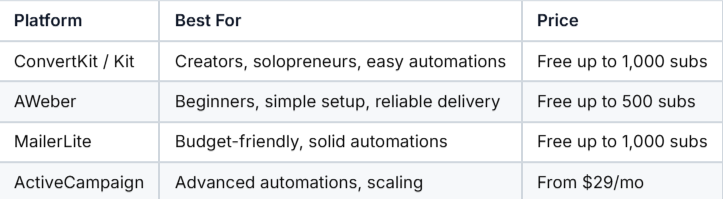
Once you've written the emails, you need a platform to send them and an automation to run the sequence. Here's a quick breakdown:
Choosing Your Email Platform
Setting up your automation in 3 steps:
Create your sequence inside your email platform as an automation triggered by your opt-in tag
Set the delay between each email using the spacing guide above
Test the whole thing by opting in yourself before you go live actually go through all 7 emails as a subscriber
The one setting most people miss:
Set your sequence to stop if someone buys before they reach Email 6. You don't want to pitch someone who already purchased. Most platforms call this a "goal" or an "exit condition" inside the automation builder. Turn it on.
How to Know If Your Sequence Is Working
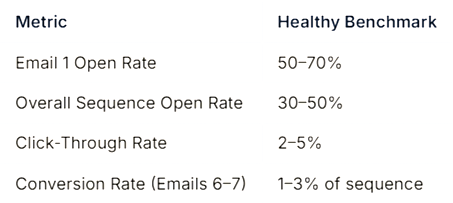
Here's what healthy numbers look like:
If your open rates are low — test your subject lines. That's the biggest lever you have.
If people open but don't click — your CTA probably isn't clear. One link, one action. Make it obvious what you want them to do.
If nobody's buying — the offer might be misaligned with the lead magnet. Your freebie and your paid offer should feel like a natural progression. If someone opts in for a pricing worksheet and you pitch a course on Instagram growth, that disconnect will kill your conversions.
Final Thoughts
Here's the recap. Seven emails, seven jobs:
Email 1 — Deliver the freebie
Email 2 — Tell your story
Email 3 — Give pure value
Email 4 — Name what's holding them back
Email 5 — Show social proof and soft pitch
Email 6 — Make the offer
Email 7 — Close and welcome them
You write this once. And then every single person who joins your list goes through the same experience getting to know you, learning from you, trusting you whether you're working, resting, or completely offline.
That's the whole point. Not hustle. Not daily content. One sequence, running quietly, doing the work for you.
If you don't have a list yet or you're just starting to grow yours, start here:
Get people on your list then let your welcome sequence take it from there.
FAQ Section
Q: How many emails should be in a welcome sequence?
A 7-email welcome sequence is the sweet spot for most online businesses, long enough to build genuine trust and make an offer, short enough to keep new subscribers engaged without overwhelming them.
Q: How far apart should welcome sequence emails be sent?
Spacing emails every 2 days works well for most audiences. The full 7-email sequence should run over 10–14 days, starting immediately when someone opts in.
Q: Should I pitch in my welcome sequence?
Yes, but not until you've delivered value first. Emails 1–5 build trust and rapport. Email 6 makes a clear, pressure-free offer. Email 7 gives a gentle last mention before transitioning to your regular newsletter.
Q: What email platform is best for a welcome sequence?
ConvertKit (now Kit) and Flodesk are the most popular choices for solopreneurs. Both offer easy automation setup, clean designs, and free or low-cost starting plans.
Q: Can a welcome sequence make sales automatically?
Yes, a well-written welcome sequence is one of the most effective passive income tools available. Once written and automated, it delivers value, builds trust, and converts new subscribers into buyers around the clock without any additional effort.