What You Actually Need to Start an Online Business (No Big Audience or Tech Skills Required)

Let me guess. You've been thinking about starting an online business for a while now. Maybe a few months. Maybe longer.
And every time you get close to actually doing something about it, one of these thoughts shows up:
"I don't have an audience."
"I don't know how any of this tech stuff works."
"I have no idea where to even start."
So you keep researching. Keep watching videos. Keep telling yourself you'll start when you feel more ready.
Here's the thing though, ready doesn't come before you start. It comes after.
And all those things you think you need before you can begin? Most of them aren't actually required. Not at the beginning. I'm going to show you exactly what you do need, and it's a lot more doable than what you've been telling yourself.
Let's Clear Something Up First
There is so much noise online about what it takes to start a business. People make it look like you need a ring light, a huge following, a polished website, and a marketing degree just to get going.
You don't.
The barrier to starting an online business has never been lower. The tools are cheap or free, the learning curve is manageable, and you don't need anyone's permission to begin.
What you do need is the right information, realistic expectations, and the willingness to start before you feel completely ready. That's it.
What You Don't Actually Need
A Big Audience
This is the number one thing that stops people before they even start. They look at successful online business owners with thousands of followers and assume that's what it took to get there.
It's not.
Every single one of those people started with zero. And most of them made their first sales to a tiny audience, sometimes just a handful of people who were the exact right fit.
You don't need thousands of people watching you. You need the right people finding you. A small, targeted audience that actually wants what you offer will always outperform a massive audience of people who don't care.
Start small. Grow from there.
Tech Skills
You do not need to know how to code. You do not need to be a web designer. You do not need to understand how servers work or how to build anything from scratch.
The tools available today are built for regular people. Canva for design. Google Docs for writing. Simple email platforms with drag-and-drop builders. Website platforms with templates that take hours to set up, not months.
If you can send an email and use Google, you have enough tech skills to start.
A Perfect Plan
Done beats perfect every single time. The people who succeed online are not the ones who planned the longest. They're the ones who started the earliest, learned as they went, and adjusted along the way.
You will figure out a lot of this as you go. That's not a problem, that's just how it works.
A Lot of Money
Most online business models have a very low cost to start. We're talking free tools, low-cost platforms, and minimal overhead compared to a traditional business. Time and consistency are the real investments here.
What You Actually Need
A Clear Direction
This is the one thing that actually matters before you start. You need to know what you're building and who it's for.
You don't need a perfect niche with a perfect target market statement. But you do need a general direction. What do you know how to do? What problem can you help someone solve? Who is the person you most want to help?
Start there. The clarity gets sharper as you move.
One Income Stream to Focus On
The biggest beginner mistake is trying to do everything at once. Affiliate marketing and a digital product and a YouTube channel and a blog and a course, all at the same time.
Pick one. Get it working. Then add the next thing.
Here's a simple way to decide:
No product yet and want to start earning fast? Affiliate marketing. You recommend tools and products you already use and earn a commission when someone buys through your link. No creation required.
Have knowledge or skills to share? A digital product. An e-book, template, worksheet, or mini guide you create once and sell repeatedly.
Want to play the long game with evergreen traffic? A blog with SEO. Write content that ranks on Google and drives traffic to your offers for months and years after you hit publish.
One at a time. That's the move.
A Place to Send People
This is your platform, the place where people find you and learn more about what you do.
For introverted entrepreneurs especially, a blog with Pinterest is one of the best combinations out there. You don't have to show your face. You don't have to post every single day. You write content, create pins, and let the traffic come to you quietly and consistently.
Other options: YouTube if you want to do video, Instagram or TikTok if short-form content feels natural to you. But if none of those feel right, a blog is a completely valid and sustainable choice.
An Email List
This is the most important asset you will ever build in your business. Not your social following. Not your website traffic. Your email list.
Here's why. Social platforms change their algorithms, reduce your reach, or disappear entirely. Your email list is yours. Nobody can take it from you.
From day one, even before you have a product, even before you have much traffic, start building your list. Set up a simple lead magnet and an opt-in form. Get people onto your list.
Your email list is where the real relationship building happens, and it's where most of your sales will come from long term.
Consistency Over a Long Enough Period
This one's hard to hear but it's the truth.
Most people quit right before things start working. They put in a few weeks, don't see results, and assume it's not working. But passive, sustainable income online is a long game. It compounds. One blog post won't change your life, but publishing consistently for six months might.
Show up even when it feels like nothing is happening. Because something is always happening, even when you can't see it yet.
A Simple Starting Point (Step by Step)
If you're reading this and you're not sure where to begin, here's the most straightforward path I can give you.
Week 1: Get clear on your direction.
Write down what you know, what you can help with, and who you want to help. Don't overthink it. A paragraph is enough to start.
Week 2: Pick your income stream.
Choose one, affiliate marketing, a digital product, or blogging. Just one.
Week 3: Set up the basics.
A simple free website or blog. A free account on an email platform. A Canva account for design. That's your entire tech stack to start.
Week 4: Create your lead magnet.
A checklist, worksheet, or short guide that solves one specific problem for your audience. This is what gets people onto your email list. Keep it simple, one afternoon of work is enough to build your first one.
Month 2: Start creating content.
Write your first blog posts. Create your first Pinterest pins. Focus on helping your audience with real, specific problems.
Month 3 and beyond: Stay consistent and keep going.
Traffic and income build over time. Keep showing up. Keep creating. Keep refining.
Why This Works Even Better If You're an Introvert
A lot of online business advice is built for extroverts. Show up everywhere. Go live every day. Build a personal brand that's loud and always visible.
That model works for some people. It drains others.
If you're introverted, you don't have to do it that way. You can build something quiet and still build something that works. SEO-driven blog content, automated email sequences, digital products that sell while you're offline, these are systems that work for you without requiring you to perform 24/7.
Your deep thinking, your ability to write with intention, your preference for quality over quantity, those are actual strengths in this space. You don't have to work around them. You work with them.
You Already Have Enough to Start
That's the thing I want you to walk away from this post knowing.
You don't need a big audience. You don't need to be a tech genius. You don't need a perfect plan or a pile of money or some special advantage other people have that you don't.
You need a direction, one income stream to focus on, a place to send people, an email list, and the consistency to keep going.
That's it. That's the whole thing.
The gap between where you are now and where you want to be isn't as wide as it feels. You just have to start.
Want the Full Roadmap?
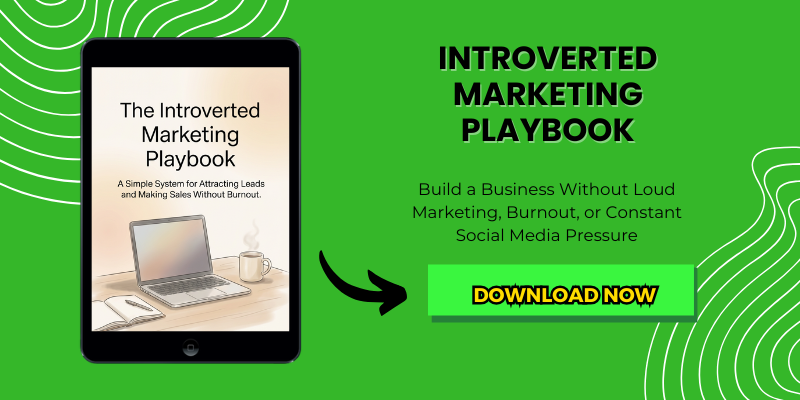
If you want to know exactly how to market your business as an introvert, how to attract leads, make sales, protect your energy, and build something sustainable without burning yourself out, The Introverted Marketing Playbook lays it all out.
It's built specifically for people like us. The ones who want to do this their way, quietly, intentionally, and on their own terms.
Grab The Introverted Marketing Playbook here and get the full system in your hands.
Want more strategies for building a quiet, profitable business without the burnout? Browse the Residual Money Train blog for more.