Is Passive Income Real or a Myth? Here's the Honest Truth for New Entrepreneurs
You keep seeing people online talking about making money while they sleep. Sipping coffee somewhere while their phone blows up with sale notifications. And part of you wants to believe it, but another part of you is like, there's no way that's actually real.
I get it. The whole thing sounds like a fantasy.
Here's the truth: passive income is real. AND most of what you see on social media about it is exaggerated, overhyped, and conveniently leaves out the part where a lot of work happened first.
So in this post I'm giving you the honest version. No hype. No highlight reel. Just a real answer to what passive income actually is, what it's not, and how you can realistically start building it, even as a complete beginner.
What Passive Income Actually Means
The Real Definition
Passive income is money you earn from something you set up once that keeps generating revenue without you having to actively show up every single time.
Key word there: constantly. Passive income doesn't mean zero work. It means you're not trading hours for dollars on repeat. You do the work upfront, and that work keeps paying you.
Think about it like this, a digital product someone buys at 2am while you're asleep. A blog post that ranks on Google and drives traffic for two years after you published it. An affiliate link inside an old email that still earns commissions. That's passive income in real life.
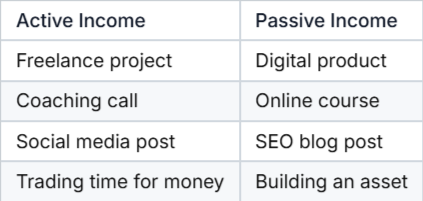
Active Income vs. Passive Income
Active income is simple: you work, you get paid. You stop working, the money stops too.
Passive income flips that. You build the asset once, and it keeps working.
The Part Nobody Talks About
Here's what gets left out of every passive income post you see on Instagram.
There is always work on the front end. Always. Creating the product, writing the content, building the funnel, that part is real and it takes time. The difference is that work pays you over and over again instead of just once.
That distinction matters. If you go in expecting passive income to mean no effort, you'll be disappointed fast. If you go in knowing it means upfront effort that compounds over time, you're set up for something real.
The Myths That Keep Beginners Stuck

Myth #1: "You Can Make Money Overnight With Zero Effort"
Social media makes it look like people set up one thing and instantly started making thousands. What you don't see is the months of content, list building, product testing, and failed attempts that came before that moment.
The overnight success story is almost always a years-in-the-making story. They just started posting about it when it worked.
Myth #2: "You Need a Huge Audience"
This one stops more beginners than anything else, and it's just not true.
You do not need 100k followers to sell a digital product or earn affiliate commissions. A small, targeted audience that actually trusts you will convert way better than a massive audience that doesn't. A blogger with 500 engaged monthly readers and the right lead magnet can make consistent passive income. Size is not the goal. The right people are.
Myth #3: "Passive Income Is a Scam"
The skepticism makes sense. There's a lot of noise in this space and plenty of people selling promises they can't back up.
But the concept itself is not a scam, it's a business model that's existed forever. Authors earn royalties. Landlords earn rent. Course creators earn sales at 3am. The scam is promising it's easy. The reality is it's simple, but it takes time and consistency to build.
Myth #4: "You Need a Lot of Money to Start"
For most online passive income streams, you need very little to get going. A free Canva account, a basic email platform, and a product idea is honestly enough to begin. Time and consistency are the real investment here, not money.
Real Examples of Passive Income That Actually Work
Digital Products
E-books, templates, worksheets, printables, swipe files. You create them once, usually inside Canva or Google Docs and sell them repeatedly through an automated funnel. No inventory, no shipping, no client calls. Most beginners price these anywhere from $7 to $197.
This is one of the most accessible passive income streams out there because the barrier to entry is low and the profit margin is high. Want to see exactly how to build one? Read How to Create and Sell a Digital Product in a Weekend it walks you through the whole process.
Affiliate Marketing
You recommend products or tools you already use, and when someone buys through your link, you earn a commission. That's it.
You can drop affiliate links inside blog posts, emails, Pinterest descriptions, YouTube video descriptions. No product creation required, which makes it a great starting point if you're brand new and not ready to create something of your own yet. Check out How to Win at Affiliate Marketing When You're an Introvert for a deeper breakdown on this one.
Blog Content and SEO
A blog post that ranks on Google can drive traffic and income for months or even years after you hit publish. You monetize it with affiliate links, lead magnets, or product mentions inside the content.
This is one of the most sustainable passive income streams because you own what you create. An algorithm can tank your social media reach overnight. Your blog is yours.
Online Courses
Package what you know into a structured course and sell it over and over again. Higher price point, more upfront effort to create but significant earning potential long term. This one's not a day-one move, but it's worth knowing it's out there as a next step when you're ready.
What Passive Income Actually Looks Like in Real Life
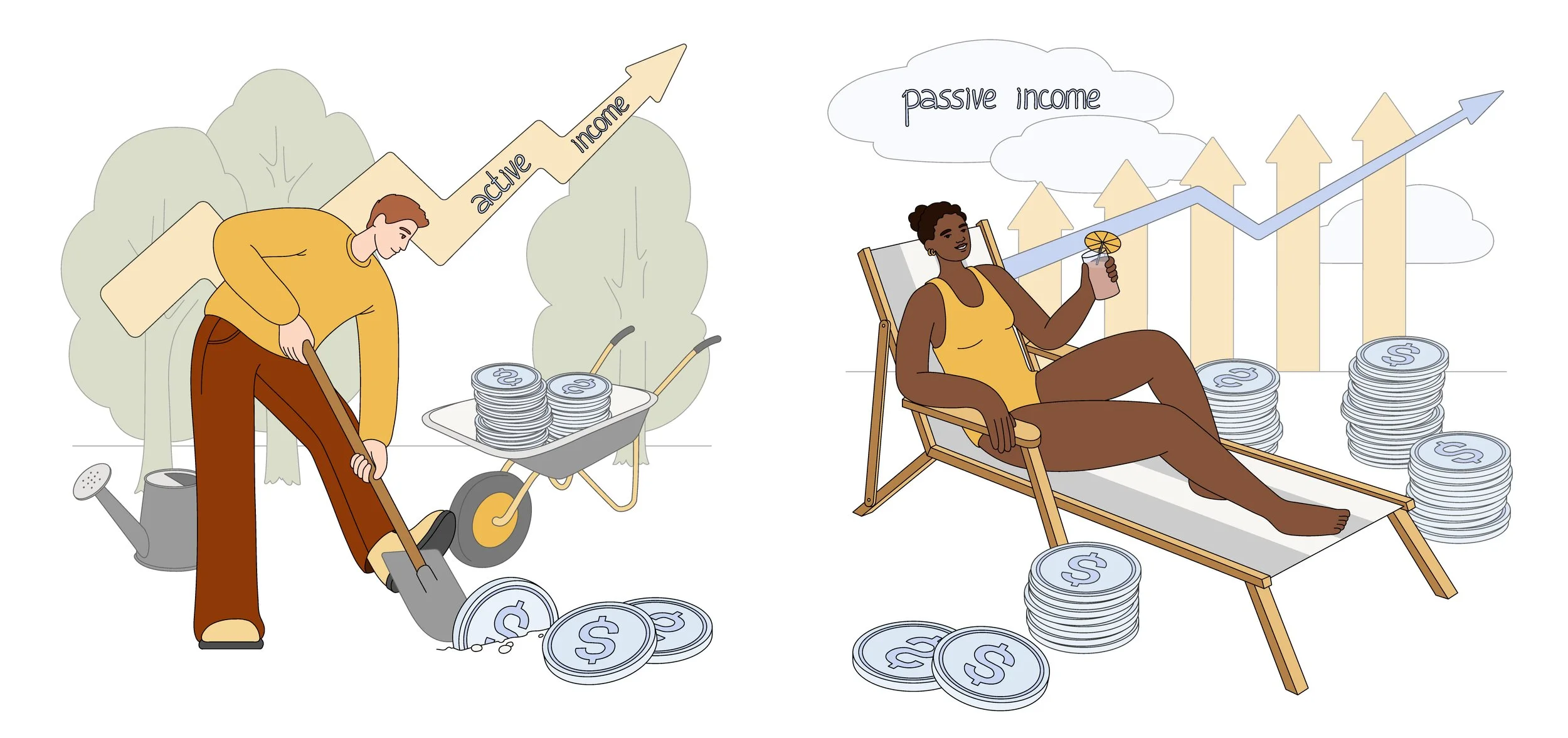
Image by Redgraystock on Freepik.com
What a Realistic First Year Looks Like
Month 1 and 2: You're learning, picking your direction, setting up the foundations.
Month 3 and 4: You're creating your first product, your first content, starting to build your email list.
Month 5 and 6: First sales start coming in. Probably small. That's okay. Small is how it starts.
Month 7 through 12: You're refining what's working, adding traffic sources, and the income starts to compound.
This is not a get-rich-quick timeline. It's a build-something-real timeline. And it's worth it.
This is just an example it can be a shorter or longer time frame based on the person and their actions.
What "Making Money While You Sleep" Actually Looks Like
It's waking up to a $27 sale notification from a digital product someone bought at midnight. It's checking your affiliate dashboard and seeing commissions from a blog post you wrote six months ago. It's a new subscriber finding you through Pinterest, going through your welcome sequence, and buying your offer, without you doing a single thing.
It's real. It just doesn't look like the highlight reel version on Instagram.
Why This Works Especially Well for Introverts
No performing. No going live. No cold calling.
Systems do the talking for you. Your best thinking, your best content, your best offers, they work around the clock, even on the days you need to step back and recharge. That's not a workaround. That's actually the most sustainable way to build a business if you're wired the way we are.
How to Start as a Complete Beginner
Step 1: Pick One Income Stream
The biggest beginner mistake is trying to do everything at once. Pick one. If you have no product yet, start with affiliate marketing. If you have something to teach or share, start with a digital product. Master one before adding anything else.
Step 2: Choose Your Content Platform
Your content is what drives traffic to your passive income streams. Pick the platform that feels most natural to you a blog, Pinterest, YouTube.
For introverts specifically, a blog with SEO and Pinterest is one of the lowest-energy, highest-return combinations available. You don't have to show your face. You don't have to post every day. You write, you pin, and the content works for you.
Step 3: Build Your Email List From Day One
Your email list is the most valuable thing in your business. Full stop. Social platforms change their algorithms or disappear entirely your list is yours and nobody can take it from you.
Start with a simple lead magnet and a basic email platform. If you need help figuring out what to offer, this post on lead magnet ideas breaks it all down.
Step 4: Be Consistent for Longer Than Feels Comfortable
Most people quit right before things start working. Passive income compounds over time, one blog post won't change your life, but fifty might. Show up consistently even when it feels like nothing is happening. Something is always happening, even when you can't see it yet.
Step 5: Learn How the Funnel Works
Traffic leads to a lead magnet, which leads to an email list, which leads to a sale. That's the whole system in one sentence. Understanding how these pieces connect is what separates people who actually build passive income from people who just keep researching it.
The Introvert's Invisible Sales Funnel breaks this down in a way that actually makes sense, go read that next.
So Is Passive Income Real?
Yes. Genuinely, yes.
But it's not effortless and it's not instant. It takes real work upfront, honest expectations, and the willingness to keep going before you see results. What you're building is an asset, something that works for you long after you've moved on to the next thing.
And if you're an introvert who's been watching the loud, exhausting version of online marketing and wondering if there's another way there is. You don't have to show up everywhere, go live constantly, or build a personal brand that drains you just to make money online.
There's a whole system built specifically for people like us.
Ready to Build Your Own?
If you want a complete roadmap for how to market your business as an introvert without burning out, without being on social media all day, and without pretending to be someone you're not, grab The Introverted Marketing Playbook.
It's a straightforward guide that covers everything: how to attract leads, make sales, protect your energy, and build a business that actually fits the way you're wired. No performing. No forcing. Just a simple system that works.
Grab The Introverted Marketing Playbook here and start building something that works for you, not against you.
❓ FAQ Section
Q: What is passive income?
Passive income is money earned from something you set up once that continues generating revenue without requiring your constant active involvement. Examples include digital products, affiliate marketing, blog content, and online courses.
Q: Is passive income actually real?
Yes — but it's not effortless. Passive income requires real work upfront to build. The difference is that work pays you repeatedly over time instead of just once, like a traditional job does.
Q: How much money do you need to start earning passive income?
Very little. Most online passive income streams — like digital products, affiliate marketing, and blogging — can be started with a free Canva account and a basic email platform. Time and consistency matter far more than startup capital.
Q: How long does it take to make passive income?
Most beginners start seeing their first results within 3 to 6 months of consistent effort. Significant, reliable passive income typically takes 6 to 12 months to build — sometimes longer depending on the income stream and how consistently you show up.
Q: What is the easiest passive income stream for beginners?
Affiliate marketing is often the easiest starting point because it requires no product creation. You recommend tools and products you already use and earn a commission when someone buys through your link.
Want more strategies for building a quiet, profitable business without burning out? Browse the Residual Money Train blog for more.